You said that this graph represents
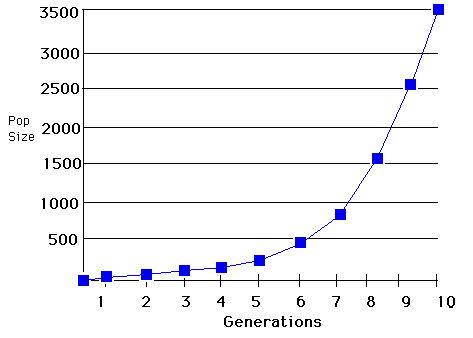 (b) continuous population growth.
no -- in the context of population dynamics, "continuous" describes
whether reproduction occurs year-round, rather than describing a form of
population growth. try again.
Click here to return to question 3.
You said that this graph represents(c) logistic growth.
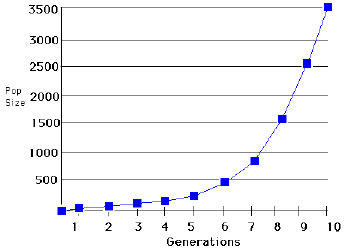
|
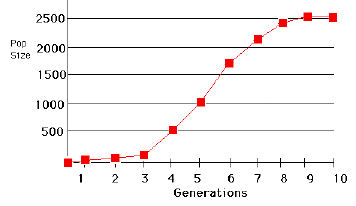
no -- "logistic" growth is growth in which the population starts small,
increases gradually at first, then increases more rapidly, but then the growth
rate slows down and eventually population size stabilizes at a carrying capacity.
|
Click here to return to question 3.
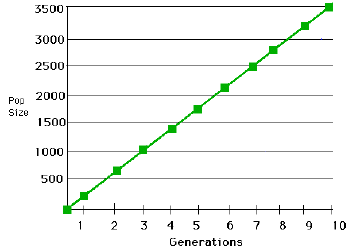
You said that this graph represents (d) a linear relationship.
|
no -- a "linear" relationship is a "straight-line" relationship between
two variables. A linear increase in population size through time probably never occurs in
nature.
|
Click here to return to question 3.
You said that this graph represents
(e) discrete growth.
no -- "discrete" is a term that refers to the time pattern of
reproduction (the opposite of "continuous", meaning "occurring only during
certain times of year"), not to the pattern of population growth.
Click here to return to question 3.

